Industrial motors serve as the core power units for intelligent manufacturing and industrial production, widely applied in power transmission and equipment drive systems across various industries. The precision of motor selection and procurement directly determines the operational stability of production lines, energy consumption costs, equipment service life, and production safety. Given the vast differences in operating environments, load characteristics, operation modes, and compliance standards among different sectors, universal motor selection criteria often fail to meet the specific demands of niche scenarios. Blind procurement can easily lead to issues such as excessive energy consumption, high failure rates, insufficient protection, and incompatibility with production conditions. This article combines universal core indicators with industry-specific operating requirements to comprehensively break down the key reference dimensions for industrial motor procurement across different sectors, providing practical guidance for corporate purchasing and selection.
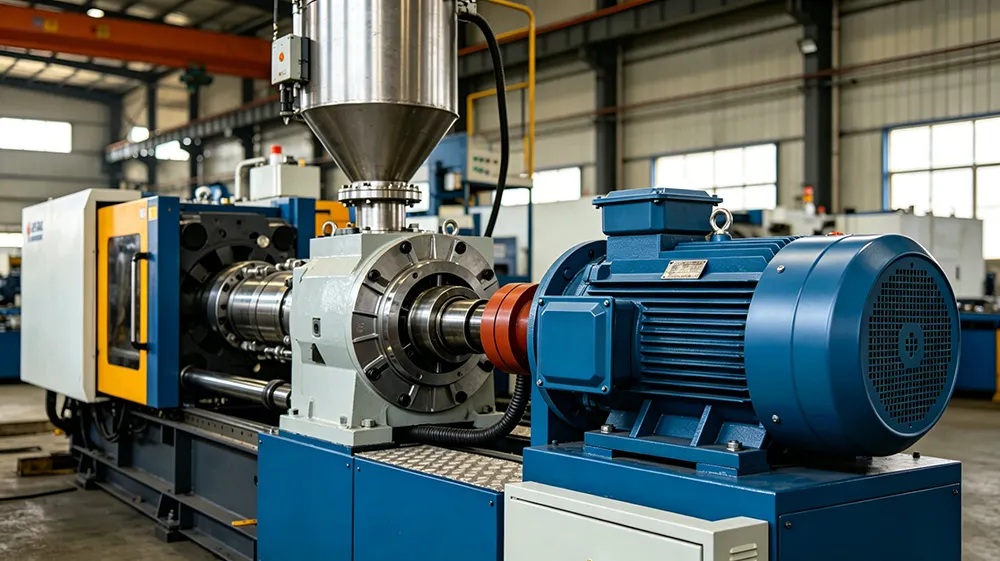
I. Universal Core Procurement Indicators (Essential Baseline Dimensions)
Regardless of the industry, industrial motor procurement must prioritize the verification of fundamental core parameters. These are prerequisites for ensuring normal motor operation, regulatory compliance, and cost control, and they also form the foundational basis for selection in specialized industries.
1. Energy Efficiency Rating and Energy-Saving Indicators
Energy efficiency is the primary determinant of an industrial motor's long-term operating costs. Currently, mainstream domestic industrial motors comply with IE3 (Super Premium Efficiency) and IE4 (Ultra-Premium Efficiency) standards, while outdated, high-energy-consuming motors are being phased out by policy mandates. During procurement, it is essential to focus on verifying both rated operating efficiency and partial-load efficiency, avoiding the pitfall of focusing solely on rated efficiency while neglecting low-load performance. For production lines requiring 24-hour continuous operation, prioritizing IE4 or higher efficiency motors can significantly reduce long-term electricity costs, with most high-efficiency motor investments yielding a payback period of 1 to 3 years. Additionally, it is necessary to distinguish between input power and output power; their ratio constitutes the operating efficiency, which serves as the core quantitative metric for evaluating a motor’s energy-saving performance.
2. Insulation Class and Heat Resistance
The insulation class dictates a motor’s high-temperature tolerance and service life, allowing it to adapt to varying temperature conditions in production environments. For standard ambient-temperature industrial settings, Class F insulation (operated at Class B limits) is recommended to provide sufficient performance margin. For high-temperature applications such as metallurgy, forging, and high-heat production lines, Class H insulation motors are mandatory to prevent insulation aging, short circuits, and burnout caused by extreme heat. Substandard insulation ratings will directly lead to soaring failure rates and drastically shortened lifespans, making this a critical indicator for high-temperature operations that cannot be overlooked.
3. Protection Level (IP Rating)
The IP (Ingress Protection) rating corresponds to a motor’s ability to resist dust, water, and corrosion, matching the presence of particulates, moisture, and impurities in the production environment. A standard IP54 rating is commonly used for general indoor dry environments; dusty or humid workshops require IP55 or higher; and scenarios involving high-pressure washing or outdoor operations necessitate an IP69K high-protection rating, which can withstand high-pressure water jets and prevent contaminants or moisture from entering the motor housing.
4. Duty Cycle and Load Adaptability
A motor’s duty cycle defines its adaptability to different operating modes, primarily categorized into three types: S1 (Continuous Duty), suitable for equipment like fans, pumps, and compressors that run non-stop for 24 hours; S2 (Short-Time Duty), suitable for short-duration start-stop equipment like valves and gates; and S3 (Intermittent Periodic Duty), suitable for equipment with frequent starts and stops, such as cranes and elevators. Procurement must strictly match the load type, distinguishing between constant torque loads and variable torque (quadratic) loads. Constant torque equipment requires sufficient starting torque, while fan and pump applications focus on speed adaptation. Furthermore, a torque reserve of no less than 15% should be ensured to prevent equipment shutdowns under peak loads.
5. Speed, Torque, and Power Parameters
Rated power, rated speed, and output torque are the core parameters for matching motor power to application requirements and must precisely align with the load demands of driven equipment. Using an undersized motor to drive a heavy load (leading to overload burnout) is strictly prohibited, while using an oversized motor for a light load (causing energy waste) is discouraged. For variable frequency drive (VFD) applications, it is crucial to verify the motor’s speed regulation range and low-speed torque stability to ensure stable power output during frequency conversion.
6. Noise and Vibration Indicators
Motor noise levels and vibration amplitude directly impact the production environment and equipment precision. General industrial scenarios require controlled noise levels, whereas precision manufacturing, cleanrooms, and food/pharmaceutical workshops require low-vibration, low-noise motors to prevent vibrations from affecting equipment accuracy or contaminating the production environment. Additionally, bearing quality directly determines vibration and noise stability; high-quality motors typically utilize high-precision bearings to maintain low-noise, smooth operation over the long term.
Stay tuned for our next update, where we will reveal more industry-specific key procurement indicators.