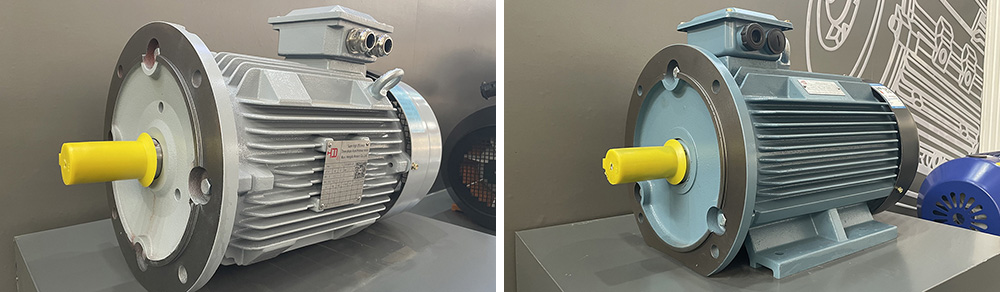
In industrial production, engineering construction, and even daily livelihood scenarios, a large number of outdated equipment are still in service. As the core power component of such equipment, electric motors inevitably suffer from reduced efficiency, soaring energy consumption, frequent malfunctions and other issues after long-term high-load operation. These problems not only lower production efficiency but also pose potential safety hazards. Replacing old motors with suitable new ones has become a key measure to extend the service life of outdated equipment, cut operating costs, and improve operational safety. However, motor replacement is far more than a simple dismantle-and-install task. Improper model selection or non-standard operation will fail to unleash the advantages of new motors, and may even damage the equipment itself, resulting in greater losses. This article elaborates on how to select and replace suitable new motors for outdated equipment from four dimensions: preliminary preparation, core model selection, installation and commissioning, and subsequent maintenance, helping users complete upgrading and renovation efficiently.
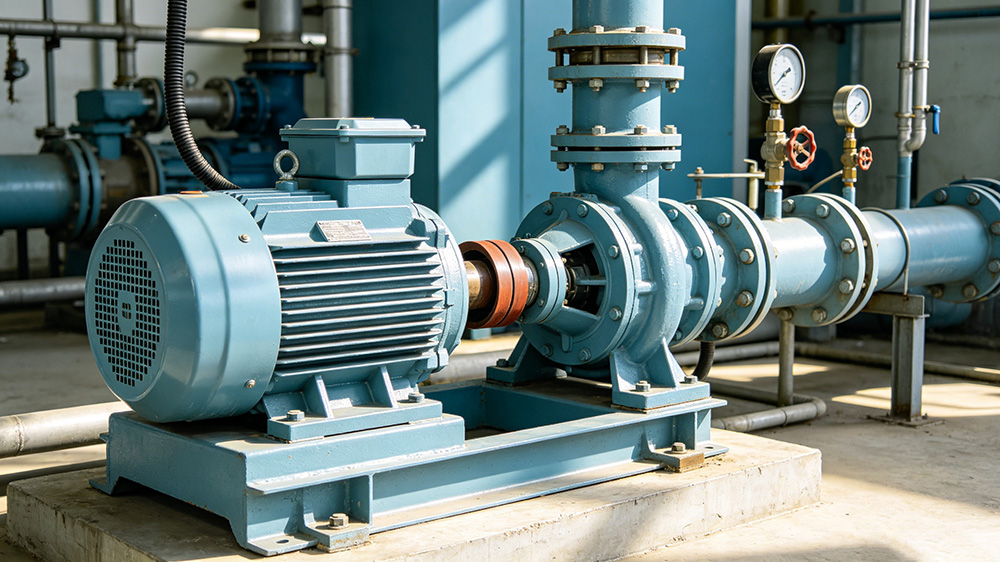
I. Preliminary Preparation: Ascertain Original Conditions and Clarify New Requirements
Adequate preparation before motor replacement is a prerequisite to avoid model selection errors and ensure construction safety. The core lies in fully grasping the operating status of outdated equipment and key parameters of old motors, as well as defining the core requirements for new motors based on actual working conditions, laying a foundation for subsequent model selection and installation.
(1) Comprehensive Inspection of Outdated Equipment and Old Motors
First, conduct an overall inspection of the outdated equipment to clarify its purpose, operating load, working environment and existing problems. Common issues include high energy consumption caused by low motor efficiency, potential safety hazards from excessive vibration and abnormal noise, or frequent malfunctions due to the motor approaching the end of its design service life that disrupt production continuity. Meanwhile, focus on collecting and recording key information of the old motor, which serves as the core basis for model selection:
Basic Motor Parameters: Record the model, rated power, rated voltage, rated speed, rated current, number of poles, ingress protection (IP) rating, insulation class and other key parameters. Special attention shall be paid to mounting dimensions such as anchor bolt spacing, center height, shaft diameter and shaft length, to prevent the new motor from failing to fit the equipment mounting position.
Motor Operating Conditions: Clarify the operation mode (continuous operation, intermittent operation, frequent start-stop, forward and reverse rotation), load characteristics (constant-torque loads such as conveyor belts, variable-torque loads such as fans and water pumps, or impact loads such as crushers), and the actual load rate of the equipment, so as to avoid the problems of "over-sized motor for light load" or "under-sized motor for heavy load".
Fault Analysis of Old Motors: Identify the root causes of old motor failures, whether stemming from aging itself, mismatched parameters, or environmental factors such as humidity, dust and high temperature that cause damage. This provides a reference for risk avoidance in new motor selection. For instance, motors with a higher ingress protection rating are preferred for humid environments, while those with a higher insulation class are selected for high-temperature environments.
(2) Define Core Requirements and Upgrading Orientation for New Motors
Determine the selection orientation of new motors in light of the application needs of outdated equipment and current industry standards, instead of blindly pursuing high-end models or simply replacing with identical units. Three core requirements shall be prioritized:
Adaptability Requirement: The new motor must match the mechanical structure, transmission system and power supply conditions of the outdated equipment, ensuring it can drive normal operation without large-scale modification of the equipment itself, thus reducing renovation costs and risks.
Energy Efficiency Upgrading Requirement: Against the national initiative for green and low-carbon development, most outdated motors are high-energy-consuming models. Priority may be given to IE4/IE5 ultra-high-efficiency motors during replacement. Despite a slightly higher initial procurement cost, the investment can be recovered through energy conservation within 1 to 2 years, bringing a significant reduction in long-term electricity expenses. For example, after replacing with high-efficiency energy-saving motors, Ningxia Petrochemical achieved an approximately 3% improvement in energy efficiency, with an annual power saving of about 3.282 million kWh and an electricity cost reduction of 1.641 million yuan.
Safety and Stability Requirement: To address potential safety hazards of outdated equipment, new motors shall feature reliable protection performance, insulation performance and overload capacity. Dust-proof motors with IP66 rating are adopted for dusty environments, explosion-proof motors for flammable and explosive scenarios, and motors with high overload capacity for impact load conditions, preventing safety accidents triggered by motor failures.
II. Core Model Selection: Precise Matching and Avoiding Common Misconceptions
Motor model selection is the core of replacement work, directly determining the operating performance of the new motor and the service life of the equipment. The fundamental principle is parameter matching, working condition adaptation and compliance with energy efficiency standards. Operation can follow a four-step selection method: demand analysis → parameter locking → type matching → verification and optimization, while avoiding common misconceptions.
(1) Matching of Core Indispensable Parameters
Parameter matching forms the foundation of model selection. Mismatch of any single parameter may lead to abnormal motor operation or equipment damage. Five core parameters shall be emphasized:
Power Matching: As the most critical parameter, calculate the actual operating power of the equipment first (e.g., water pump power = flow rate × head × medium density × gravitational acceleration ÷ efficiency; fan power = air volume × wind pressure ÷ efficiency). The rated power of the new motor shall be selected with a 10%~20% redundancy by multiplying the actual power by 1.1~1.2 to avoid burnout from overload. Meanwhile, ensure the load rate (actual power / rated power) ranges between 40% and 100%. A load rate below 40% results in an over-sized motor with efficiency dropping by over 15%, while a rate above 100% leads to overloaded operation. For example, a water pump with 10kW actual load is suitable for an 11\12kW motor, achieving an optimal load rate of 83%\91%.
Speed and Pole Number Matching: Motor speed is directly correlated with the number of poles (synchronous speed = 60 × frequency ÷ number of pole pairs; industrial power frequency in China is 50Hz), which must match the transmission requirements of the equipment. If the motor speed fails to align with the load speed, adjustment can be made via reducers or pulleys: Motor rated speed = Load speed × Transmission ratio (Transmission ratio = Reducer output speed / Input speed, or inverse ratio of pulley diameters). For example, a 50rpm conveyor belt can adopt a 1500rpm motor paired with a 30:1 reducer for speed adaptation.
Voltage and Frequency Matching: The motor shall conform to on-site power supply conditions. 380V/50Hz is mainstream for industrial scenarios and 220V/50Hz for civil scenarios. Imported outdated equipment may adapt to 220V/60Hz power supply; direct connection to 50Hz power will reduce the speed by 20%, requiring a frequency converter or customized motor. In scenarios with large voltage fluctuations such as rural power grids, wide-voltage adaptive motors (compatible with ±10% voltage fluctuation) or voltage stabilizers are recommended.
Mounting Dimension Matching: Carefully verify the center height, anchor bolt hole spacing, shaft diameter and shaft length of the new motor to ensure full compatibility with the equipment base and transmission components (couplings, pulleys), avoiding mounting misalignment and fixation failure. Formulate a foundation renovation plan in advance if dimensional discrepancies exist to prevent temporary adjustments during installation.
Ingress Protection and Insulation Class Matching: Select appropriate protection and insulation classes according to working environments. IP20 for ordinary indoor scenarios, IP65 for humid/water splashing environments, IP66 for dusty/oily environments, and IP68 for submerged environments. Class B insulation (temperature resistance up to 130℃) for normal temperature environments, Class F (155℃) for medium and high-temperature environments (40℃\60℃), and Class H (180℃) for high-temperature environments (60℃\100℃).
(2) Motor Type Matching: Align with Working Condition Requirements
Different motor types feature distinct performance characteristics and shall be selected based on load properties, operation modes and control needs, avoiding blind selection. Adaptation scenarios of mainstream motor types are as follows:
Three-phase Asynchronous Motor: Featuring simple structure and low maintenance cost, with a power range of 0.75~300kW. It is ideal for belt conveyors, fans, water pumps and conventional production equipment with continuous operation and low speed regulation requirements, serving as the preferred choice for motor replacement of outdated equipment.
Permanent Magnet Synchronous Motor: Boasting high efficiency (over 95%) and power factor as well as excellent speed regulation performance, it is suitable for long-term continuous operation and energy efficiency-demanding scenarios such as industrial fans and water pumps, enabling substantial energy consumption reduction. Attention shall be paid to demagnetization risks in high-temperature environments; motors with high-temperature resistant magnetic steel and 20% demagnetization margin are recommended.
DC Motor: Delivering superior speed regulation performance and high starting torque, it applies to electric vehicle drive, precision winding systems, cranes and other scenarios requiring high control accuracy and starting torque. However, it entails higher maintenance costs with regular inspection of commutators and carbon brushes required.
Servo Motor: Characterized by high control accuracy, fast dynamic response and strong overload capacity, it is suitable for CNC machine tools, industrial robots, packaging machinery and other equipment demanding high positioning accuracy and response speed. It can be adopted for upgrading outdated equipment to enhance control precision.
(3) Avoid Common Model Selection Misconceptions
Many users fall into misconceptions during model selection, leading to abnormal motor operation or shortened service life. The following pitfalls should be avoided:
Misconception 1: Focus only on power while ignoring working conditions. For example, using an ordinary asynchronous motor to drive impact loads such as crushers results in frequent motor burnout; or adopting a servo motor for ordinary fans causes unnecessary cost waste.
Misconception 2: Blindly choosing over-power motors, leading to the problem of "over-sized motor for light load". This not only increases procurement costs but also raises energy consumption and reduces motor efficiency, resulting in poor economic benefits in long-term operation.
Misconception 3: Neglecting mounting dimensions and only focusing on electrical parameters. This causes installation failure or transmission misalignment after mounting, triggering equipment vibration and abnormal noise and shortening the service life of both equipment and motors.
Misconception 4: Pursuing low prices by purchasing refurbished or inferior motors. Such motors suffer from inflated power ratings, rough workmanship and short service life without comprehensive warranty services, resulting in frequent subsequent failures and higher maintenance costs. It is also necessary to distinguish between copper-wound and aluminum-wound motors. Though cheaper, aluminum-wound motors feature higher temperature rise and shorter service life, making them unsuitable for long-term high-load operation.