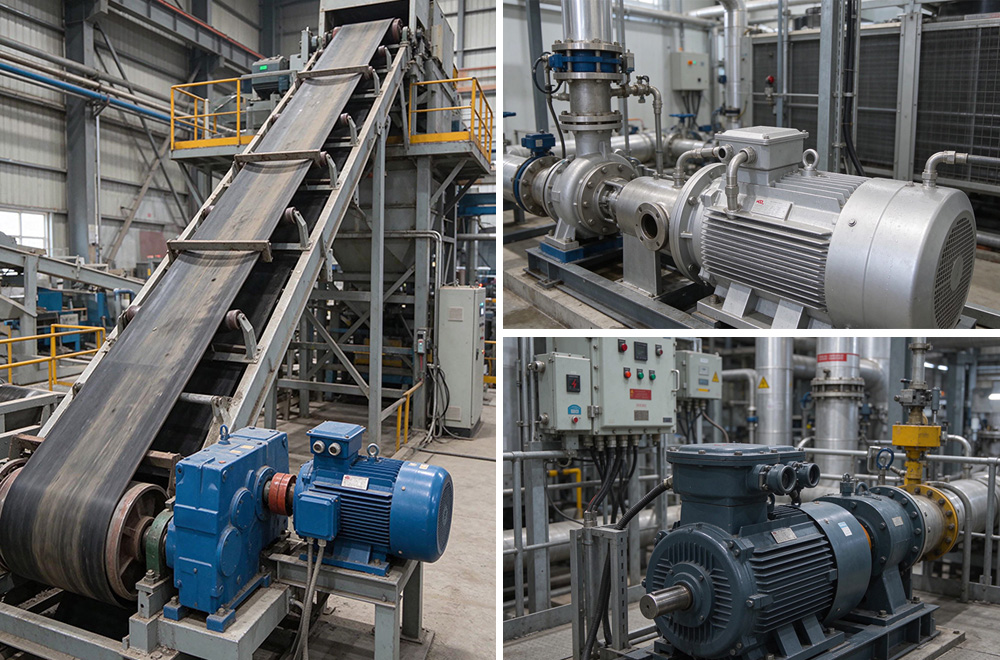
Drive motors for fans, water pumps, air compressors and production line equipment often operate nonstop around the clock. With no downtime for cooling or stress relief, minor defects accumulate gradually. By the time an alarm triggers, severe failures such as winding aging, bearing seizure or rotor stator rubbing have usually already occurred.
Temperature rise and vibration are the two most direct indicators for assessing the health of such motors. Rather than focusing solely on individual readings, it is critical to measure at the right locations and track trending changes.
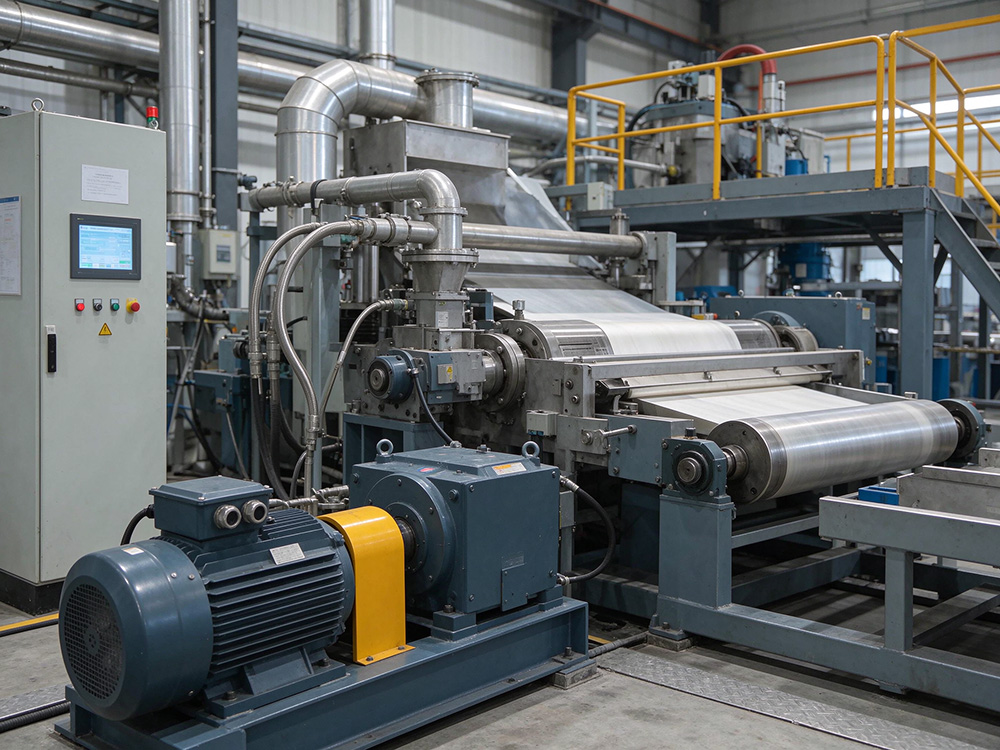
1. Temperature Rise: Distinguish Raw Temperature from Temperature Rise
Raw temperature refers to the reading taken at the measurement point. Temperature rise equals the measured temperature minus the ambient temperature at the site. For continuously operating motors, temperature rise is the preferred metric, as it reflects the motor’s self-generated heat and is less affected by high summer temperatures or poor ventilation in equipment rooms.
Winding Temperature Rise — Top Priority
Insulation service life is directly tied to winding temperature rise. Every insulating material has a temperature class. Continuous operation near the maximum rating accelerates aging exponentially. Even without triggering a trip, the insulation will gradually turn brittle and crack, greatly raising risks of inter-turn short circuits and ground faults.
For continuous-duty operation, track both steady-state values and the heating curve after startup. A healthy motor will reach a stable temperature plateau after warming up. If the temperature creeps upward steadily without stabilizing, even within permissible limits, investigate promptly. Likely causes include blocked air ducts, sustained overload or abnormal voltage.
Bearing Temperature Rise — Often the First Warning Sign
Bearings bear the bulk of energy loss during continuous rotation and rely on grease or oil for heat dissipation. Excessive temperature rise typically stems from over-lubrication, under-lubrication, degraded or water-contaminated lubricant, abnormal internal clearance or coupling misalignment.
Bearings generally have lower allowable temperature rise limits than windings and tend to fail earlier. Many continuously running motors suffer bearing overheating first, which may progress to stator rubbing. Additionally, compare readings of the front and rear bearings. A persistent large temperature gap points to lubrication, sealing or assembly issues on the hotter side.
Terminals and Motor Housing — Auxiliary Measurement Points Not to Be Missed
Power outlet boxes and wiring terminals carry constant current. Loose connections and poor contact create localized heating. Oxidation further increases contact resistance, forming a self-reinforcing vicious cycle that may ultimately cause arcing and winding burnout. Unexpected failures of pump motors frequently originate from overheated terminals.
Surface housing temperature is convenient for handheld spot checks during routine inspections. However, it lags behind the true winding temperature and serves only as an initial screening tool, not a substitute for dedicated winding temperature monitoring.
2. Vibration: Trends Matter More Than Isolated Readings
Vibration originates from unbalanced forces that persist during operation. For 24/7 motors, cyclic vibration continuously stresses bearings, anchor bolts and winding binding structures, amplifying small defects over time.
Start with Vibration Severity
Vibration severity quantifies vibration energy and follows limit standards based on motor mounting type and power rating, making it the standard on-site evaluation metric. If vibration rises steadily for a motor with historically stable readings — even while staying within acceptable limits — it signals deteriorating condition. Do not wait for values to exceed thresholds before taking action.
Analyze Spectra to Pinpoint Root Causes
Elevated 1× rotational frequency: Usually rotor unbalance. Impeller fouling, rotor deposits or minor component deformation gradually raise 1× frequency and accelerate bearing fatigue over long-term vibration.
Elevated 2× rotational frequency: Mostly coupling misalignment. Misalignment between the motor and driven load imposes constant extra radial and axial loads on bearings under torque, speeding up wear.
Rising bearing characteristic frequencies: Early damage indicator. Defects on rolling elements, inner/outer races or cages produce subtle amplitude changes that are invisible to routine walkaround checks. By the time obvious vibration appears, the bearing is close to failure.
Diagnostic Guidance for Three Measurement Axes
High horizontal radial vibration: Check for unbalance, loose anchor bolts or insufficient foundation stiffness.
High vertical radial vibration: Focus on shims and fastening of anchor bolts.
High axial vibration: Verify alignment, bearing axial preload and thrust structure.
3. Three Core Principles for Continuous-Duty Assessment
Individual indicators have limitations. Combine them according to the characteristics of nonstop equipment for effective on-site inspection:
Maintain safety margins: Short excursions near limits are acceptable for intermittently operated motors, but 24/7 units should not run continuously close to threshold values for either temperature rise or vibration.
Correlate indicators: Rising vibration paired with climbing bearing temperature usually points to bearing damage or misalignment. Stable vibration alongside gradual winding temperature rise often relates to load conditions, cooling problems or electrical faults.
Establish baseline data: Record a reference dataset once a new motor stabilizes. Compare all future readings against this baseline, which works better than simple compliance with fixed limits for long-term monitoring.
For equipment running around the clock, monitoring is not just for failure alarms. Tracking temperature rise and vibration trends helps detect hidden early defects so repairs can be scheduled during planned maintenance windows, preventing unplanned shutdowns that disrupt entire production lines.
Hengda Motor specializes in the R&D, manufacturing and service of various electric motors. With advanced facilities, lean production processes, reliable product quality and responsive after-sales support, we deliver tailored professional motor solutions for customers to create greater value.