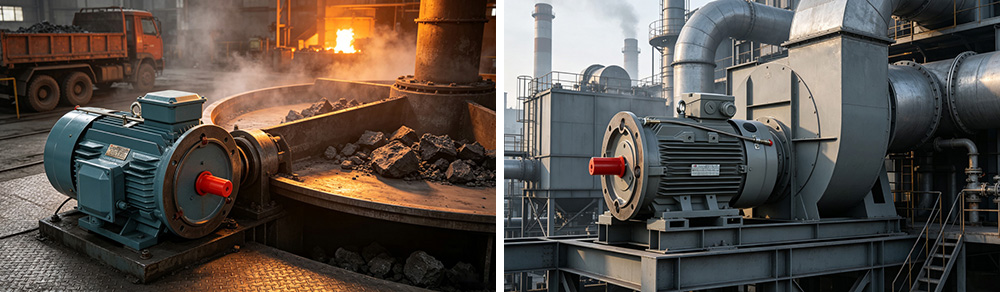
The metallurgical industry features typical harsh operating conditions including high temperature, heavy dust and heavy‑load continuous operation. Equipment across the full steel‑making process such as sintering, ironmaking, steelmaking and hot rolling as well as annealing processes operates under long‑term exposure to high‑temperature radiation, hot‑gas convection and dust erosion. As the power core of equipment, standard industrial motors are prone to insulation aging, bearing seizure, power attenuation and frequent tripping, resulting in drastically shortened service life and directly threatening the stability and efficiency of the whole production line. Accordingly, high‑temperature‑resistant motors for metallurgical applications cannot be selected merely according to conventional parameters. Priority shall be given to key indicators such as high‑temperature resistance, protection performance, operational stability and long‑term energy‑saving performance to precisely match working‑condition requirements. This paper elaborates on critical parameters for motor selection under metallurgical high‑temperature conditions and shares applicable application solutions for high‑temperature‑resistant motors combined with premium industry product offerings.
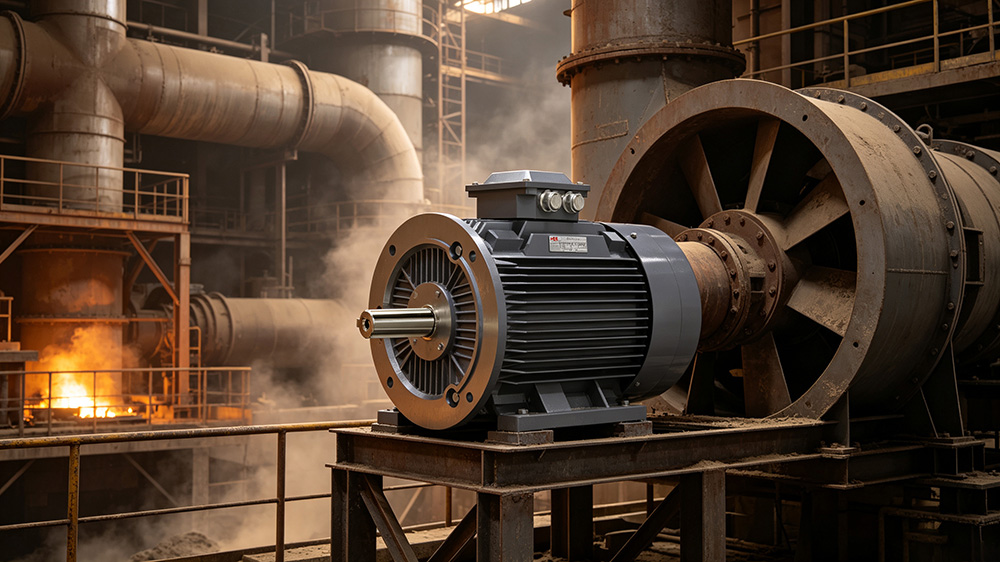
I. Key Parameters for Selecting Motors for Metallurgical High‑Temperature Conditions
Metallurgical workshops feature complex environments with sustained high temperatures, intermittent high‑temperature radiation and alternating hot‑cold cycles. Six core parameters shall be emphasized during motor selection to avoid common failures under high‑temperature service conditions.
1. Insulation Class: Fundamental Basis for High‑Temperature Resistance
The insulation class determines a motor’s high‑temperature tolerance and defines the maximum allowable operating temperature of winding insulation materials. Excessive temperature will trigger accelerated insulation aging and breakdown burnout. Most standard industrial motors adopt Class‑B or Class‑F insulation, which are only suitable for ambient‑temperature or mildly‑heated conditions and cannot satisfy metallurgical high‑temperature scenarios.
Special‑purpose motors for metallurgical high‑temperature environments must be equipped with Class‑H insulation rated for a maximum withstand temperature of 180 °C. Compared with Class‑F insulation, it provides greater high‑temperature margin and superior thermal stability. It can resist long‑term high‑temperature radiation and hot‑gas attack in metallurgical workshops, effectively preventing winding insulation aging and short‑circuit faults for equipment operating in high‑temperature zones around sintering, hot‑rolling and annealing furnaces.
2. Protection Class: Resistance to Dust and High‑Temperature Moisture Erosion
Besides high temperature, metallurgical working conditions are accompanied by abundant metallic dust, oxide scale and humid flue gas. Fine dust penetrating into motors will block heat‑dissipation air ducts and abrade windings and bearings, while moisture ingress leads to damp insulation and electric leakage. Therefore, motor protection ratings shall balance dust‑proof, water‑proof and oil‑proof performance.
The generally accepted industry standard is protection class IP55 or higher. It prevents dust accumulation and ingress and resists spray water vapor and high‑temperature flue‑gas corrosion, keeping internal motor components clean and maintaining efficient heat‑dissipation system operation. It adapts to harsh full‑process metallurgical environments and eliminates over‑heating shutdowns caused by dust blockage.
3. Duty Cycle and Heat Dissipation: Adaptation to 24‑Hour Continuous Production
Metallurgical production lines mostly follow S1 continuous duty for year‑round non‑stop operation. Motors run continuously under full load with severe heat‑dissipation pressure compounded by ambient high temperatures. Motors designed for intermittent duty will suffer heat accumulation, excessive temperature rise and power degradation under long‑term continuous service.
High‑temperature‑resistant motors for metallurgy shall support S1 non‑stop continuous duty and adopt enhanced dedicated heat‑dissipation structures with optimized air‑duct design to improve heat dissipation efficiency. They rapidly remove internally generated heat and externally radiated heat, ensuring stable temperature rise and non‑degraded performance in high‑temperature surroundings for continuously‑running equipment such as blast‑furnace auxiliaries, conveyors and fans.
4. Bearing Configuration and Lubrication: Prevention of High‑Temperature Seizure Failures
Under high‑temperature conditions, lubricating grease in ordinary bearings dries up and fails easily, giving rise to bearing wear, seizure, abnormal noise and jamming — among the most frequent failure points of metallurgical motors. Bearing configuration and lubrication design are therefore critical for high‑temperature‑resistant motors.
Premium metallurgy‑specific high‑temperature‑resistant motors are fitted with special high‑temperature‑resistant bearings and long‑life high‑temperature‑tolerant grease to prevent grease carbonization and drying under heat. Optional on‑line re‑greasing devices enable maintenance without equipment shutdown, cutting downtime losses and facilitating routine maintenance.
5. Operational Efficiency and Energy‑Saving Performance: Reduction of Long‑Term Production Costs
Metallurgical equipment features large installed power and extremely long operating hours, and motor power consumption constitutes a major portion of enterprise production costs. Inferior motors suffer sharp efficiency drops and soaring energy consumption as temperatures rise. Hence selection shall consider not only high‑temperature resistance but also stable energy‑saving performance at elevated temperatures.
Motors maintaining high efficiency under high‑temperature conditions with favorable energy‑efficiency grades deliver low‑loss long‑term operation. Compared with ordinary motors, they cut overall energy consumption and satisfy metallurgical enterprises’ needs for cost reduction and efficiency improvement.
6. Working‑Condition Adaptability: Resistance to Hot‑Cold Alternation and Vibration Shock
Some metallurgical processes involve alternating hot‑cold conditions, frequent mechanical vibration and heavy load shocks. Motors shall feature robust structural design, vibration resistance and thermal‑shock tolerance to avoid structural deformation, loose wiring and performance faults induced by abrupt temperature changes and mechanical impacts.
II. High‑Temperature‑Resistant Motor Solutions from Hengda Motor for Metallurgical Conditions
Wuxi Hengda Electric Motor Co., Ltd. possesses extensive R&D and manufacturing experience in special‑purpose motors. It thoroughly addresses equipment pain points under harsh high‑temperature conditions in metallurgy and heavy‑duty industries. Centered on high‑temperature resistance, high protection, high stability and long service life, its product portfolio is fully engineered for severe metallurgical high‑temperature environments, resolving common industry pain points including poor heat resistance, frequent failures, high energy consumption and complicated maintenance of conventional motors.
The YE3GW series high‑temperature‑resistant three‑phase asynchronous motor serves as the flagship offering for continuous metallurgical high‑temperature‑duty applications, fully complying with the above‑mentioned core parameter requirements. This series comes standard with Class‑H high‑grade insulation with a 180 °C maximum withstand temperature, delivering stable insulation without aging under sustained high‑temperature radiation and hot‑gas exposure in metallurgical workshops. The complete machine reaches IP55 high‑protection grade to block ingress of metallurgical dust, oxide scale and humid flue gas and safeguard internal core components. All models support S1 continuous duty to match 24‑hour non‑stop metallurgical production, with optimized air‑duct heat‑dissipation architecture for controllable temperature rise and consistent performance at high ambient temperatures.
In terms of core components and structural engineering, the YE3GW series adopts special high‑temperature‑resistant bearings and dedicated high‑temperature‑tolerant lubricating grease to eliminate grease drying and bearing seizure risks under heat. Selected variants are equipped with on‑line re‑greasing fittings for maintenance without shutdown, greatly boosting production‑line uptime. Reinforced mechanical construction yields low noise and low vibration, resisting frequent vibration and load shocks of metallurgical machinery. It is widely applied to sintering fans, hot‑rolling conveying equipment and furnace auxiliary machinery.
For energy‑saving performance, the YE3GW series achieves outstanding energy‑efficiency metrics with noticeably higher operational efficiency than conventional high‑temperature‑resistant asynchronous motors. Hengda’s self‑developed high‑temperature permanent‑magnet motor series further outperforms equivalent‑specification ordinary asynchronous motors by 4 percentage points in efficiency, yielding comprehensive power‑saving rates above 6 %. Long‑term deployment substantially reduces power‑consumption costs for metallurgical plants while balancing high‑temperature stability and economic benefits.
Furthermore, Hengda Motor provides customized solutions for special metallurgical working conditions. Special high‑temperature‑resistant motors with tailored frequency, voltage and power ratings can be developed according to process‑specific ambient temperature, rotating speed, power requirements and mounting configurations, covering diversified metallurgical scenarios ranging from low to high power and low to high rotating speed under heavy thermal loads. All products are manufactured and tested against industrial high‑temperature standards for demanding continuous‑production environments. Thanks to reliable performance, extended service life and convenient maintenance, Hengda motors are a preferred brand for high‑temperature metallurgical equipment matching.
III. Summary and Recommendations for Selection and Application of Metallurgical High‑Temperature‑Resistant Motors
When selecting motors for metallurgical high‑temperature conditions, avoid nominal‑parameter over‑statement and prioritize real‑world working‑condition adaptability instead of following ordinary motor standards. Four mandatory indicators shall be strictly met: Class‑H insulation, IP55 or higher protection grade, S1 continuous duty cycle and high‑temperature‑resistant bearings plus lubrication. Equipment compatibility and long‑term energy‑saving performance shall also be taken into account.
Low‑cost inferior high‑temperature‑resistant motors suffer inadequate thermal insulation, poor heat dissipation, frequent breakdowns, high energy consumption and short service life. In the long run, they generate hidden losses such as production downtime, rising repair expenses and wasted power. By contrast, Hengda’s high‑temperature‑resistant motor series is comprehensively engineered for metallurgical high‑temperature conditions in terms of core parameters, structural craftsmanship and energy‑saving capability. It balances stability, safety and cost‑effectiveness, safeguards long‑term reliable metallurgical‑line operation and cuts combined expenditures on maintenance and energy.
Hengda Motor focuses on the R&D, production and service of permanent‑magnet synchronous motors. Leveraging advanced facilities, lean manufacturing techniques, dependable product quality and responsive after‑sales service, the company delivers well‑tailored professional motor solutions for customers and creates greater social value.